The term DIGITAL is used so often today, it can be confusing. When the term "digital" is used when referring to hearing aids, it generally means the hearing aid is 100% digital. In other words, the hearing aid is indeed a "complete computer". 100% digital hearing aids have been commercially available since the mid-1990s and they are wonders of modern technology. 100% digital hearing aids can process sound using incredibly fast speeds. Interestingly, most 100% digital hearing aids have some analog components, such as the microphone and the receiver. 100% digital hearing aids transform analog information into a digital signal and process the sound to maximize the speech information you want to hear, while minimizing the amplification of sounds you do not want to hear.
Digital technology is tremendous and it allows the audiologist maximal control over the sound quality and loudness of the hearing aid. Importantly, digital technology allows the audiologist to tailor or customize the sound of your hearing aids to what you need and want to hear. In summary, if you want the best technology -- get 100% digital hearing aids.
Hearing Aid Styles Hearing aids come in a variety of styles. Each style has its own advantages and limitations. Selecting a style that is right for you depends on a number of factors, including:
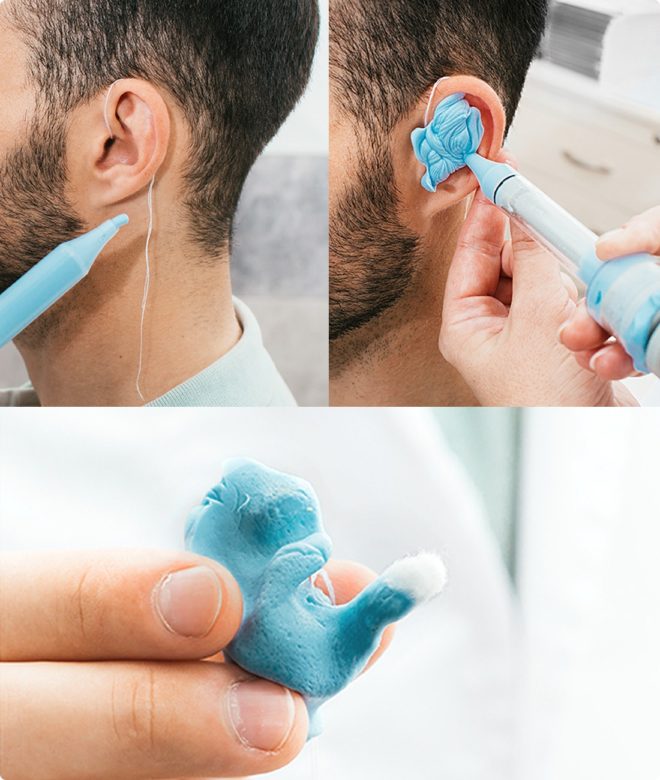
The severity of your hearing loss The size and shape of your ear Your personal preferences How well you can use your finger and hands (manual dexterity) Availability of new hearing aid technologies Different styles of hearing aids are described below. Behind-the-earBehind-the-ear (BTE) hearing aids are housed in a curved case that fits neatly and comfortably behind or over your ear. A custom ear mold is made to the exact shape of your ear. The custom ear mold is used to direct the sound from the hearing aid into your ear and to secure the hearing aid in place. People with a wide range of hearing losses, from mild to severe, can be fitted with behind-the-ear hearing aids. Because the components are housed outside of the ear, they tend to be the most durable. Behind-the-ear hearing aids need less repair and have a longer life expectancy. Behind-the-ear hearing aids can be worn easily, even by people who wear eyeglasses. In-the-earIn-the-ear (ITE) hearing aids are custom designed and fit directly into your ear, filling most of the visible portion of your ear. All of the components are housed within a single plastic shell. They have no external wires or tubes, and are very light in weight. When properly made, they fit comfortably and securely in the ear. The in-the-ear hearing aid can be used for mild to moderately severe hearing losses. They generally are not recommended for individuals who have: (1) severe-to-profound hearing loss, (2) problems with finger or hand dexterity that make manipulating small controls difficult, and (3) special needs that the in-the-ear hearing aid does not meet. In-the-canalIn-the-canal (ITC) hearing aids are custom designed, smaller in size, and fit more deeply into the ear canal than in-the-ear hearing aids. They have a wide cosmetic appeal because they are less visible than in-the-ear hearing aids. All the components are housed within a single plastic shell. Because they are smaller in size, however, they can only be used by people with mild to moderate hearing loss. Completely-in-the-canalCompletely-in-the-canal (CIC) hearing aids are also custom designed. They fit the deepest into the ear canal, so they are the least visible and most cosmetically appealing. They sit very close to the eardrum, which improves sound quality and reduces "echo" sensations. They may also reduce the problem of wind noise and feedback on the telephone. The battery life for this style is rather short because the battery is so small. The aid's size can also make it difficult to manipulate, particularly for people who have trouble with finger and hand dexterity (such as from arthritis). Fitting completely-in-the-canal hearing aids generally requires additional appointments and remolding the casing to get the right fit. Some people may not be candidates for completely-in-the-canal hearing aids because of the shape of their ear canal or the severity of their hearing loss.